Spring 2026 - Page 3
FLORA & FAUNA SPOTLIGHT
Killdeer
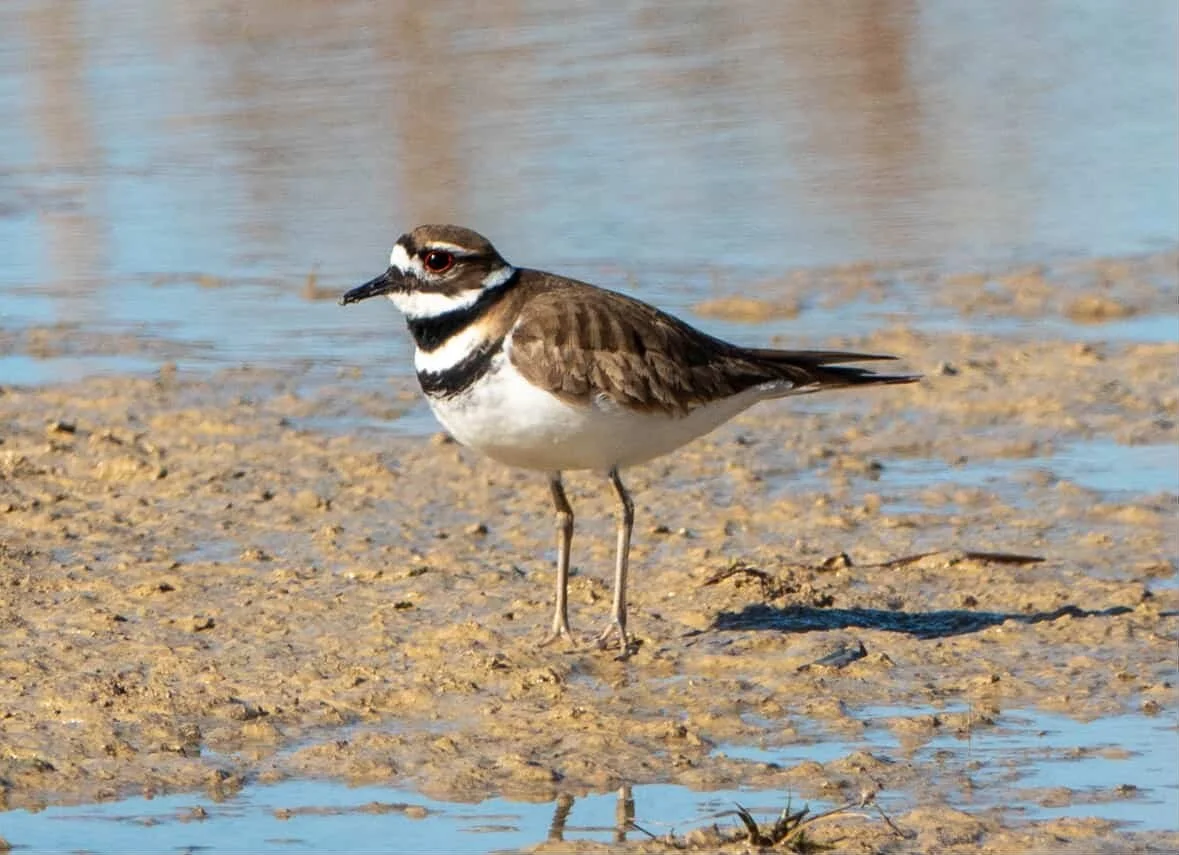
Photo: Heather Whitby
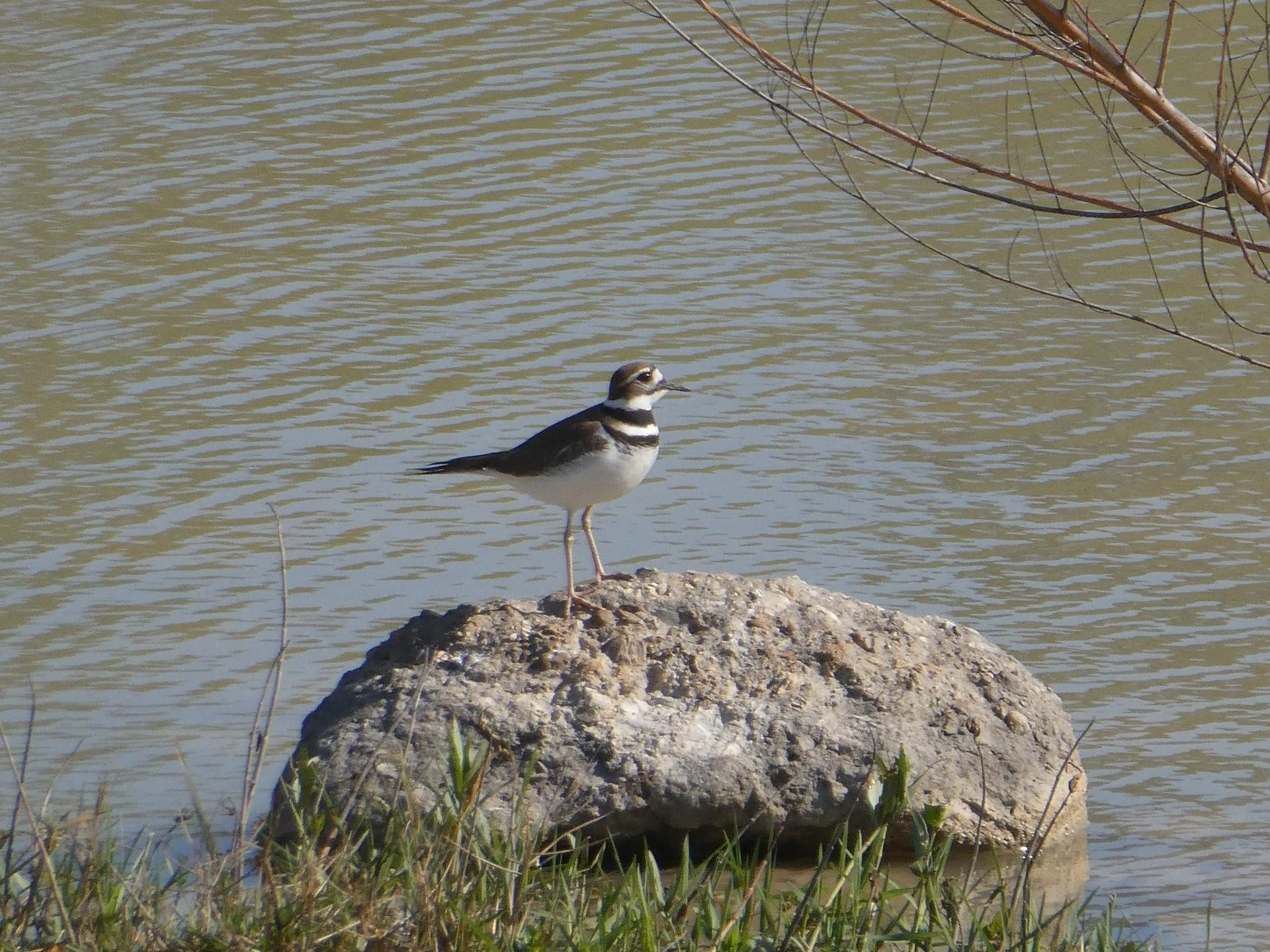
Photo: Walter Chapman
As you are walking at Willow Waterhole, you will often hear the Killdeer. Listen for their distinctive chip call. A shrill kill-deee, fill-deee or killdeer, killdeer. Also, dee-dee-dee.
Here’s more about this unique bird:
Description
Both sexes - Length: 8–11 in (20-28 cm); wingspan: 18-19 in (46-48 cm); weight: 2.6-4.5 oz (75-128 g). The Killdeer is instantly recognizable by its two bold black chest bands and white collar. Its relatively long tail is mostly orange.
Downy young may have only a single black band.
Diet
The Killdeer feeds on a wide variety of insects, including beetles, caterpillars, grasshoppers, and fly larvae, as well as spiders, earthworms, centipedes, crayfish, and snails. Killdeer eat small amounts of seeds as well.
Nesting
Don’t be surprised if you think that the bird has a broken wing. Many a person has been fooled by the bird's 'broken-wing' act, in which it flutters along the ground in a show of injury, luring intruders away from its nest.
Source: Killdeer | Audubon Field Guide
Weeds & Wildlife: Foraging, Flavor, and Next-Level Eats at Willow Waterhole
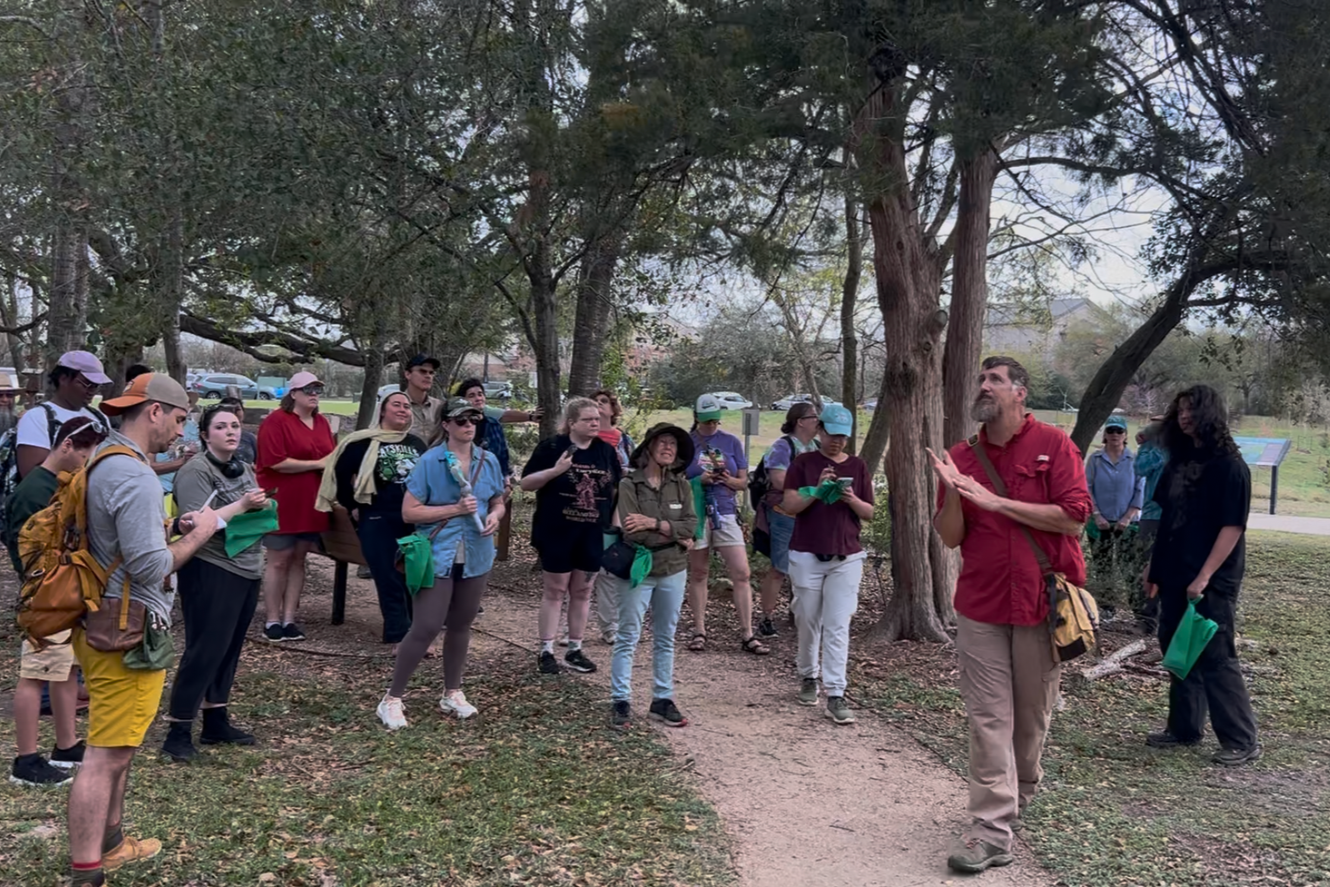
This March, Willow Waterhole Greenspace Conservancy hosted its first annual Weeds & Wildlife event, bringing together curious foodies and nature lovers for a deep dive into our local edible ecosystem. Forty-five guests gathered to learn, explore, and taste the wild bounty growing all around us.
Half the group kicked things off with wild foods expert Mark “Merriwether” Vorderbruggen, who led a hands-on walk around Triangle Lake. He taught participants how to identify edible plants, which parts to harvest, and how to forage safely and sustainably.
Meanwhile, in the classroom, Chef Keisha Griggs transformed those foraged finds into culinary magic. From sandwiches to pesto, she showed how delicious wild plants can be when elevated with skill. A standout favorite was her pecan-crusted catfish, featuring local ingredients and rich flavor. Channel catfish can be caught right here in our lakes.
Throughout the three-hour tour, attendees sampled a variety of wild greens and herbs that were real highlights of the day, including:
Wild radish – crisp with a snappy finish, perfect sauteed on the plate. Think half broccoli half radish.
Pine needles – bright and fragrant, adding an herbal lift to dishes; loads of vitamin C.
Peppergrass – spicy and bold, a natural seasoning powerhouse. Tastes a lot like wasabi.
Henbit – floral, tender and mildly sweet, versatile in salads or sautéed.
Each plant brought a different taste and texture to the table, and together they showed off the culinary gifts hiding in plain sight around our beautiful greenspace.
Weeds & Wildlife wasn’t just about food, it was about building connection: to place, to community, and to the natural world beneath our feet. Guests left empowered with new skills, fresh flavor experiences, and a whole new perspective on what “weeds” can offer when we learn to see them through a different lens.
STAY CONNECTED
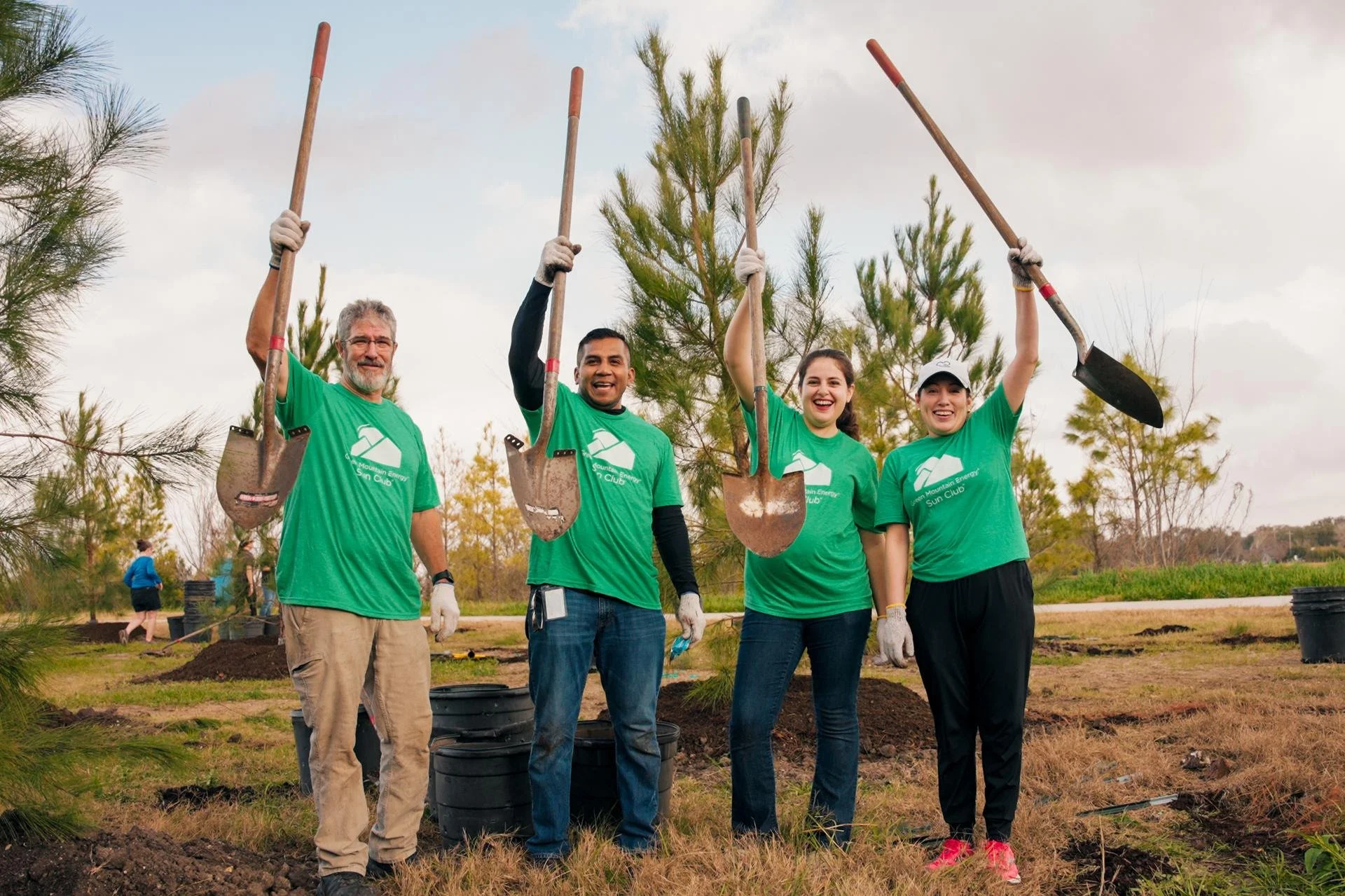
Your support keeps Willow Waterhole growing!
Every dollar and every volunteer hour makes a difference. Whether you're ready to dig in or give back, we invite you to be part of what's next.



Bluebonnets: Texas’ Wildflower Superstar
at Willow Waterhole
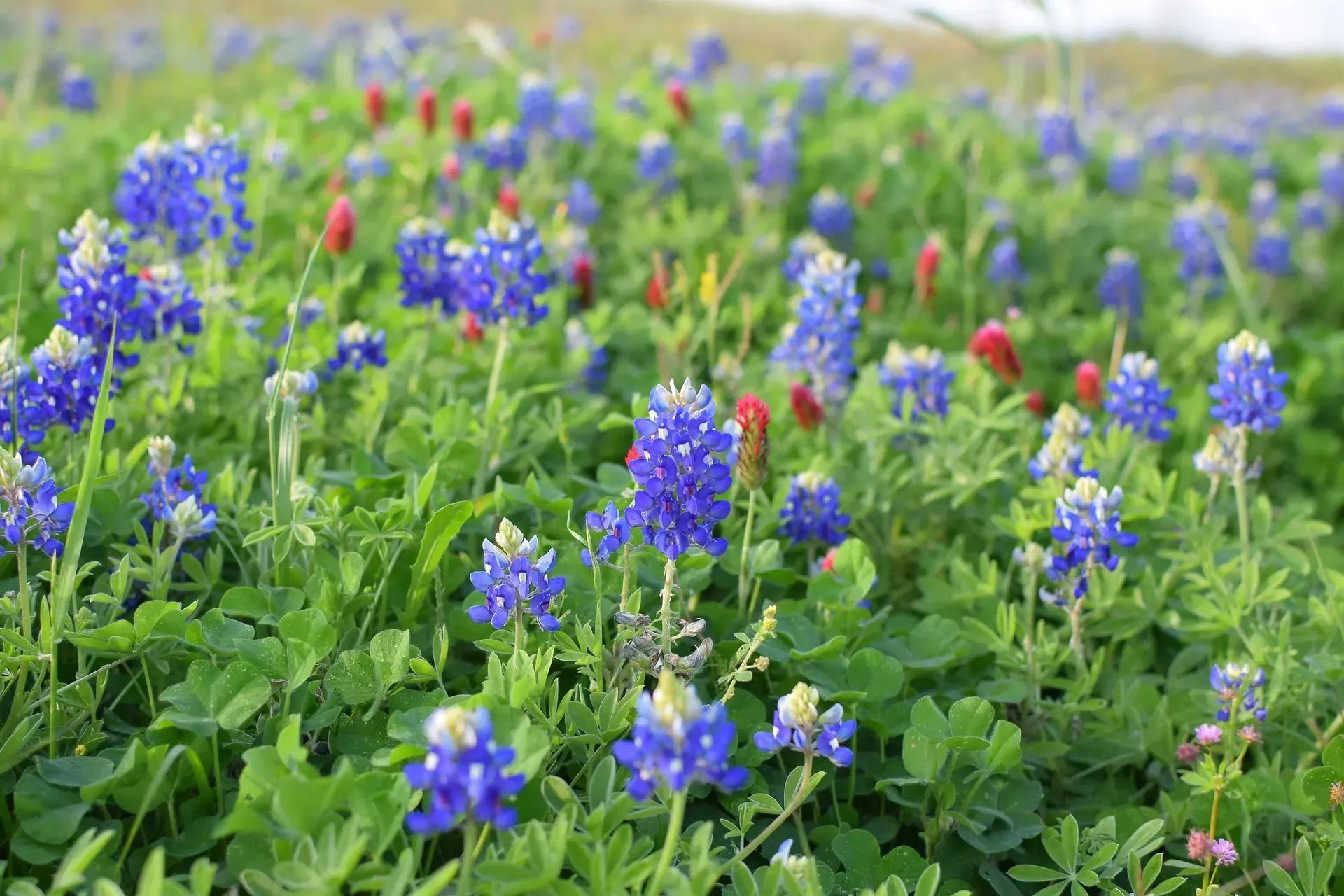
Every spring, Willow Waterhole comes alive as hillsides burst into color with bluebonnets, Texas’s beloved wildflower. The most iconic is Lupinus texensis, though Texas is home to several native species, including L. subcarnosus and the tall L. havardii. Together, they create the sweeping blue landscapes we love, with a few natural white and pink blooms adding extra charm along our trails.
Bluebonnets were named the state flower in 1901, with all native species recognized in 1971. Beyond their beauty, they play an important ecological role. As legumes, they enrich the soil with nitrogen, helping other plants thrive and supporting restoration efforts at Willow Waterhole.
They also support pollinators. Bees, especially native bumblebees, rely on bluebonnets for early spring nectar and pollen. Each flower even signals when it’s been pollinated, its white tip turning pink or purple to guide visiting bees.
At Willow Waterhole, bluebonnets are more than a spring spectacle. They brighten our trails, support pollinators, and strengthen the soil that sustains our greenspace. Their return each year is a reminder of how beauty and ecology work hand in hand.
Old World Bluestem
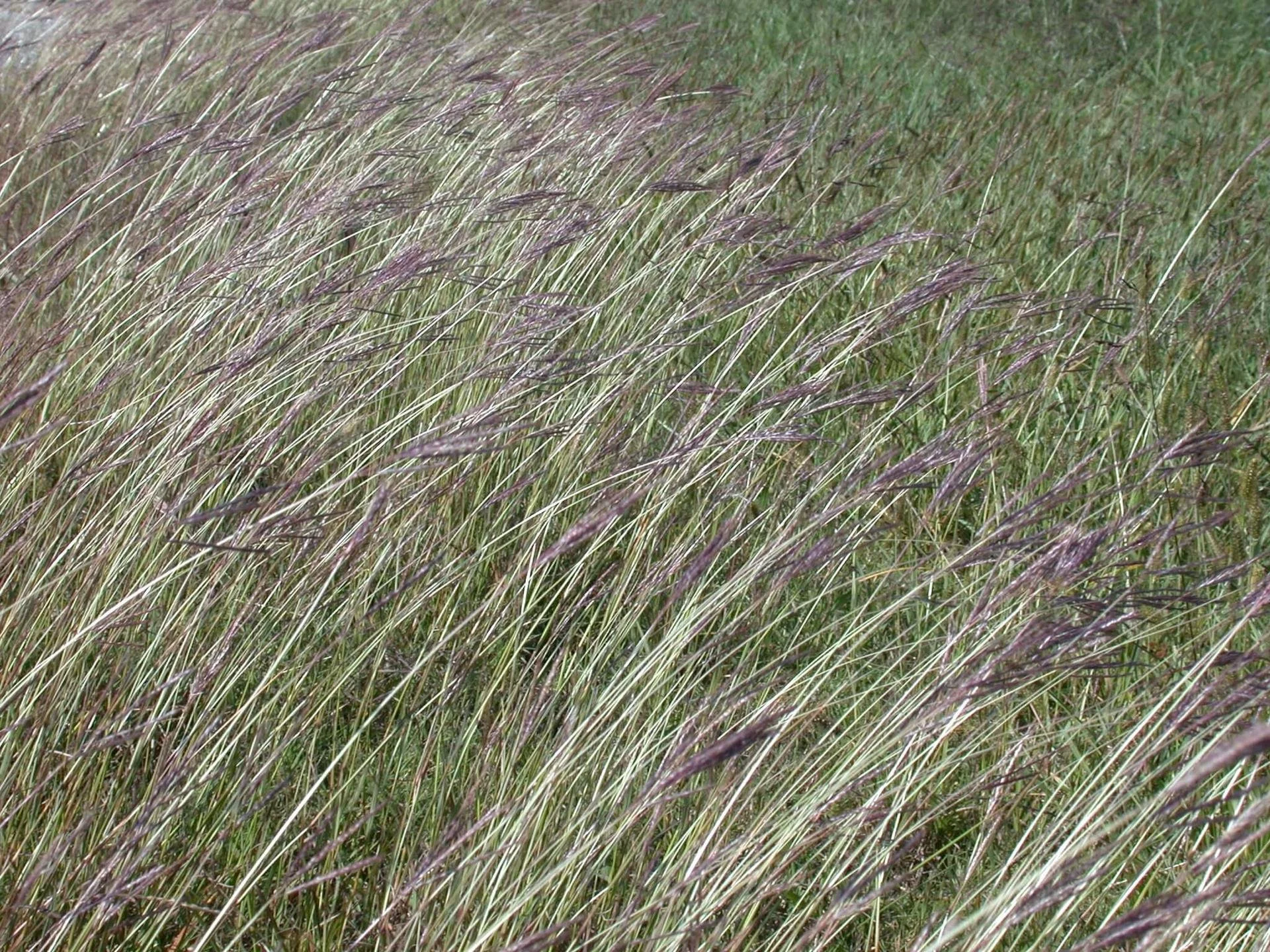
You may have noticed that purple-topped grass popping up everywhere in Houston. It’s called Old World Bluestem, or KR Bluestem, and it’s taking over fields, prairies, and roadside ditches across Texas. It didn’t start here, and it’s not playing nice with the plants that did.
Brought from Europe and Asia nearly 100 years ago, it was meant to be a tough cattle pasture, able to handle drought, heat, and poor soils. At first, it seemed like a smart idea. But over time, people noticed something unusual: where it grows, almost nothing else does.
If you’ve seen it in the wild, you’ve likely noticed how it forms thick carpets that push out everything in its way, wildflowers, native grasses, pollinator plants. But the real story is below ground.
Plants rely on tiny organisms to survive and share nutrients, especially arbuscular mycorrhizal fungi, or AMF. These fungi attach to roots, helping plants take in water and nutrients they can’t reach on their own. In return, plants provide sugars. It’s a teamwork deal that keeps prairies healthy.
Old World Bluestem may be tipping that balance. It seems to form especially strong partnerships with AMF and take more than its share, leaving native plants struggling to grow, even during restoration. Some studies suggest it may also release chemicals into the soil or work with other microbes to protect itself from insects, disease, and drought.
None of this is fully proven. Soil is complicated, plants are complicated, and nature rarely gives easy answers. But patterns across Texas and beyond point to Old World Bluestem having advantages native plants can’t match without help.
That’s why places like Willow Waterhole are studying what’s happening beneath our feet. If AMF relationships are part of the problem, we may be able to break those bonds or strengthen native ones, giving our prairies a fighting chance.